
All Aboard! Cool Facts and the Cumberland River
Written By: Tom Vickstrom
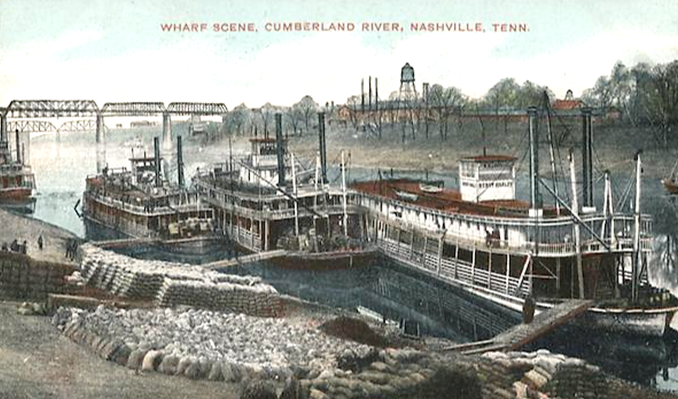
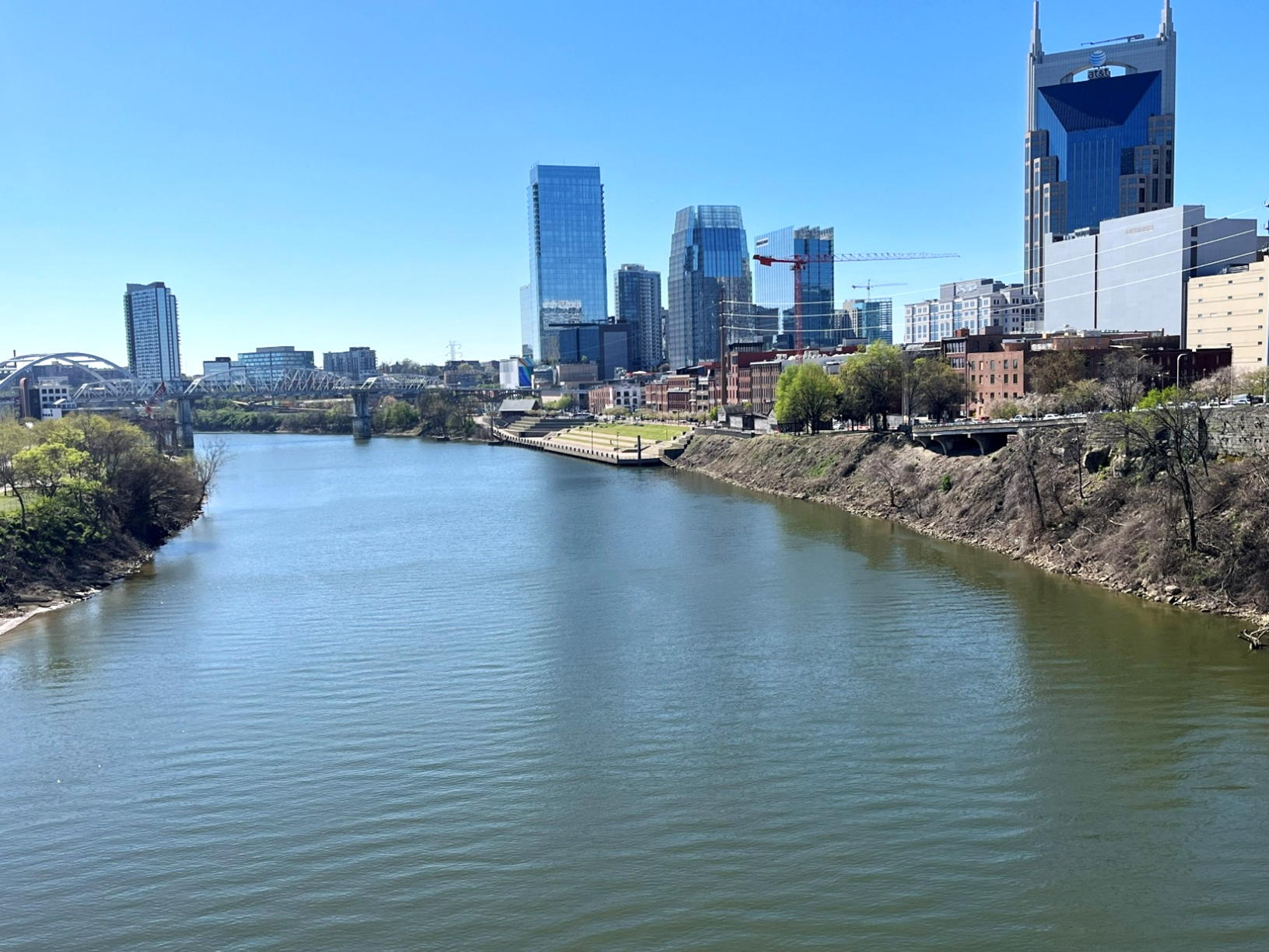
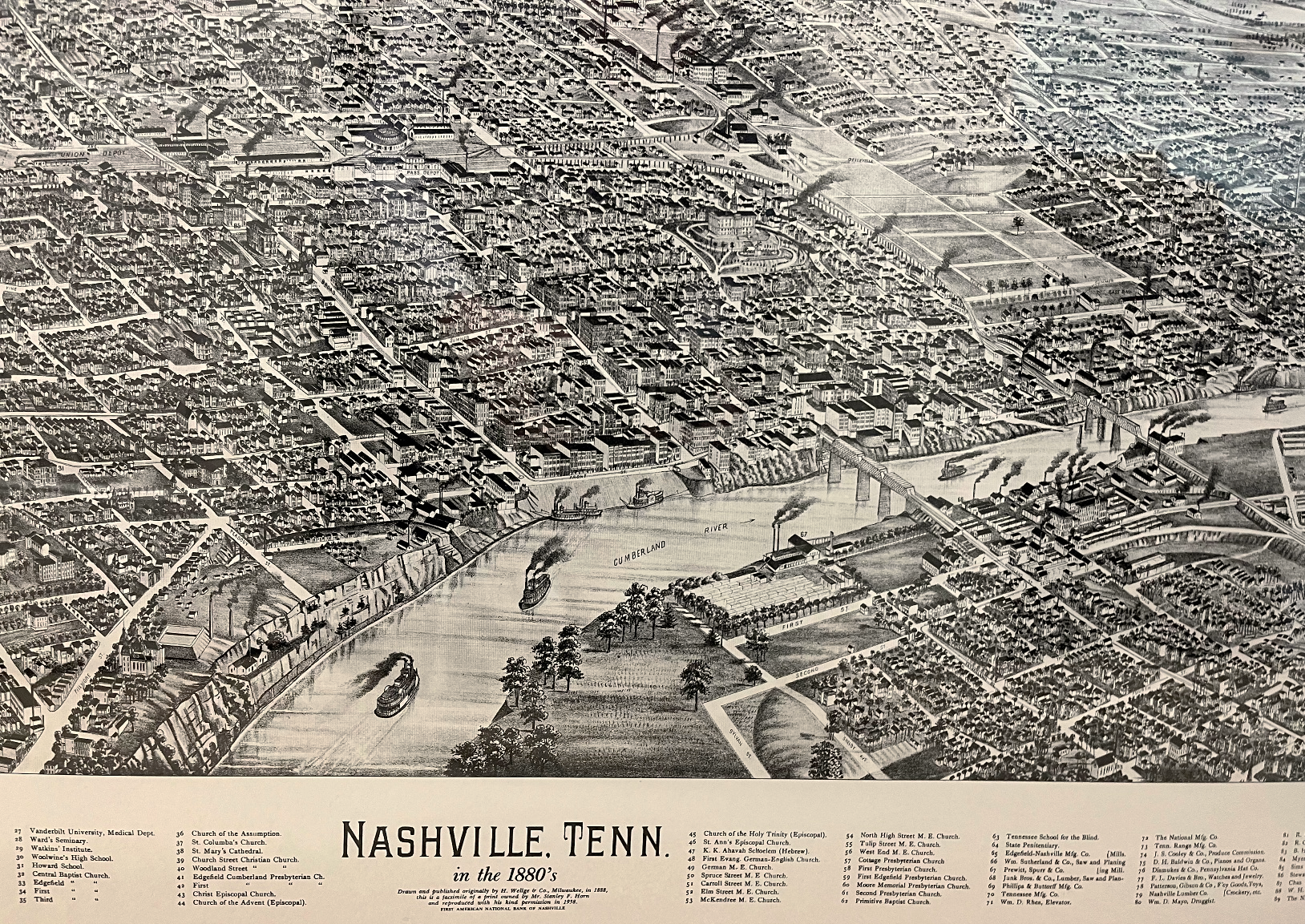
Have you ever wondered how the Cumberland River got its name? Let’s thank Dr. Thomas Walker of Virginia, who was Thomas Jefferson’s legal guardian for a time. He named the Cumberland River for a prominent waterway he found. As a surveyor, he explored the wilderness regions of the colonial west. During the process, he also named the soon-to-become famous Cumberland Gap and Cumberland Mountains. He was paying tribute to a military hero in England who became famous during an uprising in the Scottish Highlands. Perhaps it’s fate that the river was named the Cumberland rather than the Augustus River, since the Duke of Cumberland’s name was William Augustus, son of England’s King George II. The Native Americans previously knew the river by the name Quasioto.
Nashville can probably thank its existence to the river. For millions of years the flow of water carved ever deeper into the area’s limestone basin. Eventually mineral springs percolated to the surface near the site of today’s First Horizon Ballpark. Evaporation left salts and minerals, providing an abundant nutrient for buffalo, deer, elk, bears, panthers, wolves, and foxes, as observed by early settlers. Middle Tennessee, with its fertile land and rich natural resources was ideal for John Donelson. That epic four-month river journey with a flotilla of thirty or so canoes and flat boats arrived on April 24, 1780. They rowed against the current along the Cumberland for their trip’s final segment to join up with John Robertson’s pioneers.
Upstream from Nashville, beautiful tributaries of the Cumberland include the Caney Fork River, the Big South Fork, Stones River, Harpeth River, and Obey River. Downstream feeder rivers include the Red River, Rockcastle River, Laurel River, and the Little River.
The Cumberland River’s connection to the Ohio River provides an impressive inland waterway that is 1,669 miles long (688 miles on the Cumberland and 981 miles on the Ohio River). Not only that, but the Ohio’s confluence with the Mississippi offers another 859 miles travel to New Orleans. Until the railroads came, waterways were our primary transportation routes. Consider the fact that by 1830 there were about thirty steamboats on the Cumberland carrying at least 150 tons of cargo upriver to Nashville, and 250 tons for the downriver trip. The steamboats made an average of 14 round trips per year. These were magnificent watercraft, dipping only about three feet into the river. Just to give idea of capacity, 7 standard 18‑wheeler tractor trailers, fully loaded, can transport 150 tons.
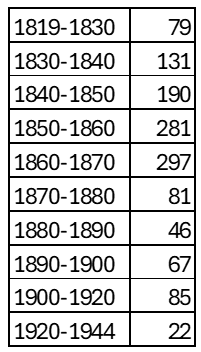
Number of Steamboats
on Cumberland River Per Year
Source:
Douglas Byrd
"Steamboatin' On The Cumberland,” TN Book Co., 1961.
Cool Facts about the Cumberland…
§ By the time the Cumberland reaches the Ohio River, it is moving an average of 300,000 gallons of water per second- a volume that could fill Nissan Stadium to the brim in about a half an hour.
§ As reported in the Nashville Banner, Oct 25, 1925, before the river was regulated by dams, an early settler, John Boyd, Jr., would place a sugar kettle over his head and use it as a diving bell to walk across the bottom of the Cumberland River.
§ In the fashionable neighborhood homes of antebellum Nashville, it was once popular to line garden walkways with crushed seashells brought up from New Orleans by steamboat.
§ By 1910, Nashville was the largest hardwood-producing city in the world, employing over 2,000 workers in the vicinity of today’s Nissan Stadium. Steamboats and river-guided logs supplied dozens of milling and manufacturing plants stationed directly on the east bank of the Cumberland. Nashville handled virtually the entire world supply of red cedar and was one of the greatest global markets for chestnut. The trees harvested from the rugged, heavily wooded areas of Middle Tennessee and Southeastern Kentucky also included white and red oak, yellow poplar, and walnut.
§ A man, Mr. Frank Turner, who was employed at the Enterprise Soap Works, was hailed in 1910 as the “Lifesaver of the Cumberland.” In separate incidents over the years, he saved seven people from drowning in the river by rushing out in his rowboat to help them. Source: Dromgoole, Will, Nashville Banner, Dec 10, 1910
§ A non-profit, The Cumberland River Compact, formed in 1997, supports and improves the river.
§ The night of May 8, 1829, Tennessee’s Governor Sam Houston, despondent over a failed marriage, left Nashville in disguise on the steamboat Red Rover. During his journey west, the story goes, an eagle swooped down on him, which he believed to be a sign that something great was in his future.
§ “Snowball” was riverboat talk to describe the effect obtained by water and spray going up and over the paddle wheel while the boat was underway.
§ During WWII, between 1942-1944, the Nashville Bridge Company built 173-foot steel submarine chasers and minesweepers from its Nashville location on the Cumberland River. They were sent to the Atlantic Ocean. A total of 16 ships were built and sent.
§ About 1794 a tavern known as the Red Heifer was opened in downtown Nashville by one of the original settlers, John Boyd. This distillery was at Spout Spring which was located at the eastern end of “Spring Street” (now Church Street) where quite a cascade of pure limestone water poured over the bluff. At the sound of the horn, thirsty souls hastened to the Red Heifer to partake in a batch of hot, raw corn whiskey. A neatly scraped buffalo’s horn was the common drinking cup, each suspended by a leather string. James Robertson did not visit the Red Heifer, and the next year procured passage of an act forbidding the distillation of corn. Source: Clements, Paul, “Chronicles of the Cumberland Settlements 1779-1796” self-published, Nashville, Tn, 2012
§ Today there are 4 active navigation locks and 10 major dams managed by the U.S. Army Corps of Engineers across the complete watercourse of the Cumberland River system. In earlier times, December through May was peak season (high water) for flatboats, keelboats and then steamboats for trips to New Orleans. The best travel times were called “spring tides” and fell between March-April. The June- November date range was known as the “low water shutdown”, when as many as 16 shoals and sandbars became exposed as navigation hazards.
§ The Victorian Italianate buildings we enjoy along 2nd Avenue North were built between 1870 and 1890 and owe their existence and unique architectural layout to the steamboat era. From the Cumberland River Wharf, crews unloaded bulk freight directly into the basements. The goods were then moved through the building to wholesale and retails storefronts on the 2nd Avenue side, then known as Market Street. Heavy hardware, tools, and construction materials, dry goods and apparel, groceries and luxuries, and specialty items such as household pharmaceuticals, glass windowpanes, tinware, even high-end German toys came to Nashville along the river!
Written By: Tom Vickstrom
